Category: advocacy

  • High Cholesterol and Your Kidneys: What Nobody Is Telling You

    High Cholesterol and Your Kidneys: What Nobody Is Telling You

    You have probably heard that high cholesterol is bad for your heart. But here is something most people — including many patients — are never told: high cholesterol is also quietly destroying your kidneys.

    This is not a scare tactic. This is something I had to learn the hard way, living with kidney disease and dialysis for over 15 years. And today, I want to make sure you do not find out too late.

    Whether you are perfectly healthy and want to stay that way, or you are already managing kidney disease — this article is for you.

    What Is Cholesterol, Really?

    Cholesterol is a fatty substance found naturally in your blood. Your body actually needs some cholesterol to function — it helps build cells and produce certain hormones. The problem begins when there is too much of it.

    There are two main types you need to know:

    LDL (Low-Density Lipoprotein) — This is the “bad” cholesterol. Too much LDL causes a build-up of fatty plaques in your blood vessels, narrowing them and reducing blood flow.

    HDL (High-Density Lipoprotein) — This is the “good” cholesterol. HDL helps carry excess cholesterol away from your arteries and back to your liver to be removed.
    When your LDL is too high and your HDL is too low — that is when the trouble starts.

    The Kidney-Cholesterol Connection Nobody Talks About

    Your kidneys are fed by a network of tiny, delicate blood vessels. Every minute, they filter about half a cup of blood — cleaning out waste, balancing fluids, and regulating what stays in your body and what leaves.

    When cholesterol is too high, those blood vessels begin to narrow. Fatty deposits — called plaques — build up along the vessel walls. Less blood reaches the kidneys. And when the kidneys are not getting enough blood, they cannot do their job properly.

    Over time, this leads to:

    • Reduced kidney function

    • High blood pressure (which then damages the kidneys even further — a vicious cycle)

    • Increased risk of chronic kidney disease (CKD)

    • For those already living with CKD, a much faster rate of decline

    Here is the part that shocks most people: this damage happens silently. You will not feel your blood vessels narrowing. You will not feel your kidneys struggling. By the time symptoms show up, significant damage may have already been done.

    What About Dialysis Patients?

    If you are on dialysis, please pay close attention to this section.
    Many dialysis patients assume that because the machine is cleaning their blood, they do not need to worry as much about what they eat. I understand that thinking — I had it too.

    But here is the truth: dialysis does not remove cholesterol from your blood.

    Dialysis removes waste products like urea and creatinine. It removes excess fluids. But it does not filter out fat. That responsibility still belongs entirely to you — to what you eat, how you move, and how you manage your health between sessions.

    Dialysis patients already face a significantly higher cardiovascular risk than the general population. High cholesterol on top of that is like adding fuel to a fire. The damage to blood vessels accelerates. The risk of heart attack and stroke increases. And your overall quality of life — and survival — is affected.

    This is not meant to frighten you. It is meant to empower you to make choices that protect you.

    Foods That Spike Your Cholesterol (Including Ghanaian Favourites)

    Let us be honest — some of these will be familiar. That is okay. Awareness is the first step.
    Foods that raise LDL (bad) cholesterol:

    • Deep-fried foods — Kelewele, bofrot, fried yam, fried plantain eaten daily

    • Excess palm oil — A staple in Ghanaian cooking, but in large quantities it raises saturated fat significantly

    • Coconut oil in large amounts — Despite its popularity, it is high in saturated fat

    • Full-fat evaporated milk — Commonly added to tea, porridge, and oats

    • Processed meats — Sausages, corned beef, canned sardines in heavy oil

    • Waakye with the full works — Spaghetti, stew, sausage, and fried fish all together is a cholesterol feast

    • Meat pie, sausage roll, and biscuits — High in trans fats from the pastry

    • Indomie with the full seasoning sachet — The seasoning is loaded with sodium and additives that affect cholesterol metabolism

    • Red meat eaten too frequently — Beef, goat, pork; enjoy occasionally, not daily

    • Butter and margarine — Especially in large amounts

    • Egg yolks in excess — More than 3 a week is generally not recommended for CKD patients

    What to Eat Instead

    The good news is that there are delicious, accessible foods that actually help protect your kidneys and manage cholesterol — many of which you already know.
    Foods that lower LDL and support kidney health:

    • Garden eggs (African eggplant) — One of the most underrated foods in Ghana. They contain compounds that actively help reduce cholesterol. Eat them often.

    • Oats — A simple oats porridge in the morning is one of the best things you can do for your cholesterol.

    • Fresh fish — boiled or grilled — Tilapia, herring, and mackerel are excellent. The key is how you prepare them. Boil or grill instead of frying.

    • Beans and lentels — Excellent for cholesterol management and gentle on the kidneys when eaten in appropriate portions.

    • Kontomire (cocoyam leaves) — Rich in nutrients and a great base for stews without the heavy oil.

    • Fresh fruits — Apples, pears, and berries are particularly good for cholesterol.

    • Water — Staying hydrated helps your kidneys flush out waste more effectively.

    One simple rule to remember: boiled or grilled over fried — always.

    Could Your Cholesterol Be Genetic?

    This is something many people do not know: cholesterol can be genetic.

    There is a condition called Familial Hypercholesterolaemia (FH) — where a person is born with a gene that causes their liver to produce too much cholesterol, regardless of what they eat. So even if you eat clean and exercise regularly, your cholesterol levels may still be dangerously high.

    Signs that your high cholesterol might be genetic:

    • Your cholesterol has been high since you were young

    • You have a family history of high cholesterol or early heart attacks

    • Your cholesterol remains high even after significant dietary changes

    If this sounds like you — please tell your doctor. You may need medication such as statins, alongside dietary changes, to manage your levels effectively. Diet alone may not be enough.

    What Tests Should You Ask For?

    Most people managing cholesterol only check their LDL and HDL levels. But there are two additional markers that give a much fuller picture — especially for kidney patients:

    Homocysteine — An amino acid that, when elevated, increases the risk of arterial damage and cardiovascular disease. Declining kidney function directly raises homocysteine levels. Ask your doctor to check it.

    ApoB (Apolipoprotein B) — A more precise measure of the cholesterol particles that cause arterial damage. Many cardiologists now consider it more accurate than LDL alone.

    If you have kidney disease and nobody has checked your homocysteine or ApoB alongside your kidney function — bring it up at your next appointment. You deserve the full picture of your health.

    Here is what I want you to walk away with today:

    1. Get a lipid panel blood test — Know your LDL, HDL, and total cholesterol numbers. Also ask for homocysteine and ApoB if you have kidney disease.

    2. Tell your doctor your family history — High cholesterol in parents or grandparents matters. Mention it.

    3. Reduce fried foods — You do not have to eliminate them completely. But daily frying is damaging your vessels daily.

    4. Swap in kidney-friendly foods — Garden eggs, oats, fresh fish, beans. Start with one swap this week.

    5. If you are on dialysis — talk to your dietitian — Ask specifically about cholesterol management for dialysis patients. It is a conversation worth having.

    Final Words — From Someone Who Knows

    I have been living with kidney disease for over 15 years. I have been on dialysis. I have had a transplant. And through all of it, I have learned that the choices we make every day — especially at the table — matter enormously.

    Nobody told me early enough that my cholesterol and my kidneys were in a relationship. I had to discover it through experience and research.

    You do not have to wait that long.

    Your kidneys are working hard for you every single day. Feed them right. Protect your vessels.

    Ask the questions your doctor may not think to bring up.

    Knowledge protects. And I hope this article has given you some today. 💙

    Hilda is the Founder of The Kidney Advocate and Kidney Health Awareness Ghana (KHAG). She has lived with kidney disease for over 15 years and is passionate about making kidney health education accessible to Ghanaian communities. Visit her at thekidneyadvocate.blog.

    Did you find this article helpful? Share it with someone who needs it. And leave a comment below — have you ever had your cholesterol checked alongside your kidney function? I would love to hear from you. 🫘
  • Your Medication Tray Is Doing What Your Kidneys Can’t: A Complete Guide to Dialysis Medications

    Your Medication Tray Is Doing What Your Kidneys Can’t: A Complete Guide to Dialysis Medications

    When I first started dialysis, nobody sat me down and explained my medications. A nurse handed me a tray. A doctor rattled off names. And I sat there, nodding, pretending I understood — while quietly wondering why I needed so many tablets just to stay alive.

    Fifteen years later — through dialysis, a transplant, and back to dialysis again — I can tell you this: understanding your medications is not optional. It is one of the most powerful things you can do for your own survival.

    This article is what I wish someone had handed me on day one.

    Why Dialysis Patients Need So Many Medications

    Here is the thing people don’t realise: dialysis cleans your blood. That’s it. It filters waste and removes excess fluid. But your kidneys did so much more than that — they regulated hormones, activated vitamins, controlled blood pressure, managed minerals. Dialysis doesn’t replace any of that.

    Your medications do.

    Every tablet on your tray is filling a gap that your kidneys left behind. Once I understood that, the tray stopped feeling like a punishment and started feeling like a support system.

    The Medications, Explained Simply

    EPO — Erythropoietin

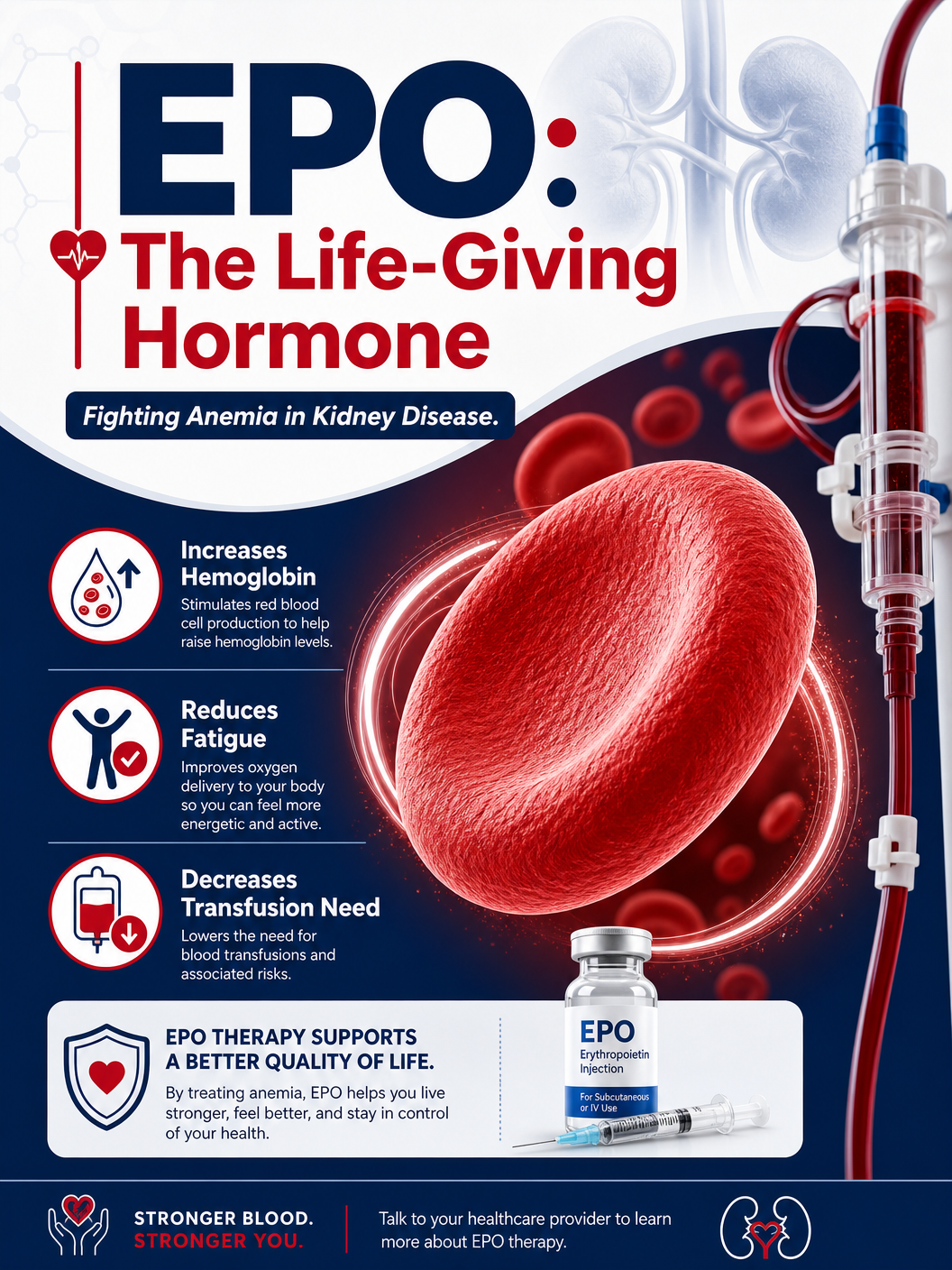
    Your kidneys produce a hormone called erythropoietin, which tells your bone marrow to manufacture red blood cells. When your kidneys fail, EPO production drops dramatically. The result is anaemia — not the mild tiredness kind, but the kind that leaves you unable to walk across a room without gasping, pale, foggy, and barely functional.

    EPO is that hormone, synthesised and given as an injection — either subcutaneously (under the skin) or through your dialysis line during your session.

    I remember the difference EPO made when my haemoglobin was finally managed properly. I didn’t realise how exhausted I had been until I wasn’t anymore.

    EPO is not without risks — it can raise blood pressure and, in rare cases, cause a condition called pure red cell aplasia. But for most dialysis patients, it is life-changing and non-negotiable.

    Iron — Encifer and Other Formulations

    EPO cannot work without adequate iron. Think of EPO as the instruction and iron as the raw material. Your body cannot build red blood cells without enough iron in storage — no matter how much EPO it receives.

    Dialysis patients lose iron continuously — through the dialysis process itself, through regular blood draws, and through the chronic low-grade inflammation that kidney disease causes. Encifer is one brand of intravenous iron used in dialysis centres. Some patients also take oral iron supplements, though absorption is often poor in kidney disease.

    Your iron status is tracked through two key markers: ferritin (your iron stores) and transferrin saturation (TSAT — how much of your iron-carrying protein is actually loaded with iron). Learn these numbers. Ask for them at your next review.

    Blood Pressure Medications — Antihypertensives

    Kidney disease and high blood pressure have a deeply destructive relationship. Damaged kidneys cannot regulate sodium and fluid properly, which drives blood pressure up. Sustained high blood pressure then accelerates kidney damage further. Even on dialysis, this cycle continues.

    You may be on one antihypertensive or several. ACE inhibitors, ARBs, calcium channel blockers, beta-blockers, alpha-blockers — each works on a different mechanism, and your nephrologist has chosen yours based on your specific cardiovascular and kidney profile.

    The most important thing: take them consistently. Including on dialysis days, unless your doctor has explicitly told you otherwise. A common and dangerous mistake is skipping them on dialysis days, assuming the machine will handle it. It won’t — not fully, and not safely.

    Post-dialysis hypotension is also real. Your blood pressure can drop significantly after a session. Talk to your team about whether your doses should be timed before or after dialysis to reduce this risk.

    Calcichew — Calcium Carbonate (Phosphate Binder)

    This one comes with a very specific instruction: take it with food. Not before. Not after. With your meal, as you eat.

    Here is why. When you eat, phosphorus from your food enters your digestive system. Calcichew — a form of calcium carbonate — binds to that phosphorus in your gut before your body can absorb it. The phosphorus then leaves your body through your stool rather than entering your bloodstream.

    High phosphorus (hyperphosphataemia) is one of the most dangerous and under-discussed complications of kidney disease. It causes severe itching, bone disease, and vascular calcification — where calcium-phosphorus crystals deposit in your blood vessels and heart valves. This leads to serious cardiovascular complications and is a significant cause of death in dialysis patients.

    Other binders exist — sevelamer (Renagel/Renvela), lanthanum carbonate (Fosrenol), sucroferric oxyhydroxide (Velphoro) — and your prescription depends on your calcium levels and your centre’s protocols. The principle is the same for all of them: they must be taken with meals to intercept the phosphorus before absorption.

    Alfacalcidol — Active Vitamin D

    Most people don’t know that your kidneys activate Vitamin D. The Vitamin D from sunlight or supplements exists in an inactive form. Your kidneys convert it into calcitriol — the active form your body can actually use to absorb calcium from your gut.

    When kidneys fail, this activation stops. Without active Vitamin D, calcium absorption drops, and your parathyroid glands — sensing low calcium in the blood — go into overdrive. They produce excess parathyroid hormone (PTH), which pulls calcium out of your bones to compensate. Over time, this causes renal osteodystrophy: weak, painful, fracture-prone bones. Excess PTH also causes calcification in soft tissues, blood vessels, and organs.

    Alfacalcidol is the active form of Vitamin D, replacing what your kidneys can no longer produce. It requires regular calcium monitoring, because too much can push calcium too high (hypercalcaemia). The goal is a careful balance — enough to suppress PTH and protect your bones, without tipping into excess.

    Why Compliance Is Not Negotiable

    Medication fatigue is real. I have felt it. There are days when the tray is the last thing you want to see, when being a patient feels like a full-time job you never applied for.

    But here is what happens, concretely, when these medications are skipped:

    Skip EPO: Haemoglobin falls. Transfusions become necessary. Each transfusion introduces foreign antibodies that make transplant matching harder and rejection more likely. For anyone on the transplant waiting list, this is a serious, potentially irreversible consequence.

    Skip your phosphate binder: Phosphorus climbs — usually without any obvious symptoms at first. Itching begins. Calcification progresses silently. Cardiac events follow. By the time it feels serious, significant damage may already have occurred.

    Skip BP medications: Blood pressure spikes. Fistulas and grafts clot. Stroke risk rises sharply. In a population already at elevated cardiovascular risk, uncontrolled hypertension is an accelerant.

    Skip alfacalcidol: PTH climbs unchecked. Bone pain develops gradually, then suddenly. Fractures become more likely. In some cases, the parathyroid becomes so enlarged it requires surgical removal — a parathyroidectomy.

    Skip iron: EPO becomes ineffective. Haemoglobin stays low despite the injection. Fatigue persists. The full benefit of your EPO is wasted.

    Understanding the why behind each medication transforms compliance from obedience into informed self-preservation. You are not taking these tablets because you were told to. You are taking them because they are doing the work your kidneys stopped doing.

    Managing the Side Effects

    Epo

    Can raise blood pressure — monitor yours closely, especially after starting or after a dose increase. Some patients experience mild flu-like symptoms for a day or two after injection. If your haemoglobin drops suddenly and unexpectedly despite regular EPO, flag this immediately — it can rarely indicate pure red cell aplasia.

    Iron

    Nausea and metallic taste are common, especially with IV iron. Dark or black stools are expected and harmless — that is unabsorbed iron. During IV iron infusions, your unit should monitor you for reactions. Oral iron is best taken with a small amount of food to reduce stomach upset.

    Blood Pressure Medications

    Post-dialysis hypotension is the main concern — your pressure may drop significantly after a session, making dizziness and falls more likely. Sit before you stand. Don’t skip meals. Discuss timing of your dose with your nephrologist, as some medications are better taken after dialysis rather than before.

    Calcichew

    Constipation is the most common complaint. Work within your fluid allowance and ask your renal dietitian about fibre sources that are also low-phosphorus. The chalky taste bothers some people — chewing quickly and following with a small permitted sip of water helps. If you are struggling with adherence because of the taste or texture, ask your pharmacist about alternative binders.

    Alfacalcidol

    Hypercalcaemia — too-high calcium — is the risk to watch for. Symptoms include nausea, confusion, excessive thirst, constipation, and muscle weakness. These overlap with many other conditions, which is why regular calcium blood monitoring is essential. Tell your team immediately if anything feels off.

    You Are Your Own Best Advocate

    Ask what every tablet is for. Ask what happens if you miss a dose. Ask about side effects and what to watch for. Request a medication review if your regimen feels overwhelming or something has changed.

    You deserve to understand every single thing going into your body. Not because you are a doctor. But because you are the person living inside this body, managing this condition, and making decisions every single day.

    Your medication tray is doing the work your kidneys can’t. Understand it. Work with it. And advocate loudly when something doesn’t feel right.

  • Dialysis — What No One Tells You Before You Start

    Dialysis — What No One Tells You Before You Start

    When someone tells you that you need to start dialysis, your brain doesn’t process it like information. It lands like a verdict.

    I know because I’ve been there. I sat in that chair — or maybe I was standing, or pacing, I honestly can’t remember — and all I heard after a point was noise. The doctor kept talking. I kept nodding. And somewhere inside me, something very quiet broke.

    That’s the part nobody puts in the brochure.

    So today, I want to talk about dialysis the way I wish someone had talked to me about it — not with medical jargon, not with a clipboard, but with honesty and a little grace.

    So, what actually is dialysis?

    Your kidneys are supposed to be your body’s filter. Every single day, they clean your blood, remove waste, balance your fluids, and regulate things like blood pressure and mineral levels. When kidneys fail — whether slowly over years or more suddenly — that work stops getting done.

    Dialysis is a machine (or a method) that steps in to do the job your kidneys can no longer do.
    There are two main types:

    Hemodialysis is what most people picture — you’re connected to a machine through access points in your body (usually a fistula or a catheter), and your blood is cleaned outside your body and returned to you. Sessions typically happen three times a week and last around four hours each.

    Peritoneal dialysis uses the lining of your abdomen as the filter. A fluid is introduced through a catheter in your belly, it absorbs waste, and then it’s drained out. This one can often be done at home.

    Both do the same essential job. Which one is right for you depends on your health, your lifestyle, and what your medical team recommends.

    Why does dialysis become necessary?

    Kidney disease is often quiet. For years — sometimes decades — your kidneys can lose function without you feeling dramatically different. That’s both a mercy and a trap, because by the time symptoms appear, the damage is often significant.

    When kidney function drops to a critical level (typically around 10–15% of normal), your body can no longer safely manage on its own. Waste builds up in the blood. Fluid accumulates where it shouldn’t. The heart, lungs, and brain begin to feel the effects.

    At that point, dialysis isn’t a last resort. It becomes a lifeline.
    For some people it’s a bridge — they start dialysis while waiting for a transplant. For others, it becomes a long-term way of life.

    Either way, it’s not the end of the story. It’s a new chapter — one that requires adjustment, but not defeat.

    What nobody prepares you for: the emotional weight

    I’ve talked to enough dialysis patients — and I’ve lived this myself — to know that the hardest part of starting dialysis often isn’t physical.

    It’s grief.
    You grieve the life you had before the schedule. The freedom to eat and drink without calculating. The days that weren’t divided by appointments. The version of yourself that didn’t know what a fistula was.

    That grief is real and it is valid. Please don’t let anyone rush you through it.

    But here’s what I also know: people adapt in ways that surprise even themselves. The routine that felt like a cage eventually becomes familiar.

    The machine that looked terrifying becomes almost ordinary. And somewhere along the way, you start building a life around it — not despite it.

    You are not your diagnosis. But your diagnosis is part of your story now, and there is no shame in that.

    If you’re just starting — or supporting someone who is

    Give yourself permission to feel what you feel. Ask every question, even the ones that feel small or silly. Find your people — a support group, an online community, an advocate (hello, that’s me). And please, keep showing up for your sessions.

    Dialysis works when you work with it.

    This month, we’re walking through everything — the medications, the labs, the supplements, the routines. You don’t have to figure it all out today. Just take it one session at a time.

    —Hilda Addo, The Kidney Disease Advocate

    Have questions about dialysis? Drop them in the comments. If you’re newly diagnosed or newly started, I especially want to hear from you.

  • 🔬 Lab Detective: Let’s Talk About Potassium

    🔬 Lab Detective: Let’s Talk About Potassium

    Every time your lab results come back, there is a little number sitting quietly on that sheet — potassium. Most people outside the kidney world have never given it a second thought. But for those of us living with kidney disease, that number can mean the difference between a good day and a medical emergency.

    Today on Lab Detective, we are diving deep into potassium — what it is, what it does, why your kidneys have everything to do with it, and what happens when it goes wrong.

    What Exactly Is Potassium?

    Potassium is a mineral and an electrolyte. Your body needs it to function. It helps your muscles contract, keeps your heart beating in a normal rhythm, supports your nerve function, and helps move nutrients into your cells and waste products out.

    The normal potassium range in the blood is 3.5 to 5.0 mmol/L. Most healthy people maintain this balance without even thinking about it. Their kidneys quietly filter out any excess potassium through their urine, and life goes on.

    But here is the thing — when your kidneys are damaged or failing, they can no longer do that filtering job properly. Potassium starts to build up in your blood, and that is where things can get dangerous.

    Why Kidney Patients Must Pay Close Attention

    Healthy kidneys filter about 90% of the potassium you consume through food and drink. When kidney function drops — especially below 30% (Stage 4 or 5 CKD) — or when you are on dialysis, your kidneys can no longer keep up.

    Dialysis does remove some potassium, but only during your session. Between sessions — those long hours in between — potassium keeps building. This is why what you eat between dialysis days matters so much.

    High Potassium (Hyperkalemia) — The Silent Danger

    High potassium is called hyperkalemia. It is one of the most serious complications for kidney patients, and the frightening part is that many people feel absolutely nothing until it becomes critical.

    Symptoms of high potassium include:

    • Muscle weakness or heaviness in the legs

    • Fatigue and general tiredness

    • Numbness or tingling

    • Nausea

    • Irregular heartbeat (palpitations)

    • In severe cases — cardiac arrest

    Yes. Your heart can stop if potassium gets too high. This is not said to frighten you, but to help you understand why your doctors watch this number so closely.

    Low Potassium (Hypokalemia) — The Other Side

    Low potassium, called hypokalemia, can also happen — especially if you are restricting too aggressively, vomiting frequently, or on certain medications. Symptoms include muscle cramps, weakness, constipation, and abnormal heart rhythms. Less common in dialysis patients, but still worth knowing.

    What Does Your Potassium Number Actually Mean?

    Below 3.5 mmol/L — Low potassium (hypokalemia). Your doctor may adjust medications or diet.

    3.5 – 5.0 mmol/L — Normal range. Well done!

    5.1 – 6.0 mmol/L — Mildly high. Watch your diet carefully.

    Above 6.0 mmol/L — Dangerously high. Medical attention needed urgently.

    Foods High in Potassium to Be Mindful Of

    • Bananas, oranges, avocados

    • Tomatoes and tomato-based sauces

    • Potatoes (especially boiled with the skin)

    • Beans and lentils

    • Groundnuts (peanuts)

    • Plantain

    • Coconut water

    • Dark leafy vegetables in large amounts

    A Word on Local Ghanaian Foods

    Living in Ghana, some of our everyday staples are naturally high in potassium. Plantain, garden eggs, beans, and tomato stew are part of our culture and our identity. This does not mean you can never eat them — it means you need to be smart about portion size and preparation.

    Leaching vegetables — cutting, soaking, and boiling — can help reduce potassium content significantly. We will cover this in much more detail during our diet month coming up.

    My Personal Experience With Potassium

    I have been through dialysis, a kidney transplant, and I am back on dialysis. Over 15 years, I have seen my potassium creep up after enjoying a meal I thought was completely safe. I have felt that strange heaviness in my legs and wondered why — only for my labs to confirm a high number.

    It taught me that this is not about perfection. It is about awareness.

    You do not have to be afraid of food. You just have to be informed. And that is exactly what Lab Detective is here for — every single Wednesday.

    Next Wednesday we decode another important lab value. Until then — eat wisely, live fully. 💙


  • The Biggest Lies We Tell Ourselves About Fluid Restriction

    The Biggest Lies We Tell Ourselves About Fluid Restriction

    What I wish someone had told me before my kidneys paid the price.

    When I was first told to restrict my fluids, I smiled, nodded at the doctor, and went home and drank a full glass of water because I was thirsty.

    I mean — it’s just water. How bad could it be?
    That was one of the lies I told myself. And it cost me.

    If you’ve ever lived with kidney disease — whether on dialysis or managing CKD — you’ve probably told yourself at least one of these lies too.

    Today we’re calling them out, not to shame anyone, but because the truth is what actually keeps us alive and living well.

    Lie #1: “A little extra won’t hurt.”

    This is the most common one, and honestly, the most dangerous. We think in terms of feeling — if I don’t feel swollen, if my ankles look fine today, surely one extra cup of tea is harmless.

    But fluid doesn’t always show up immediately. It hides. It settles around your lungs and heart before it ever shows on your ankles. By the time you feel it, the damage is already happening.

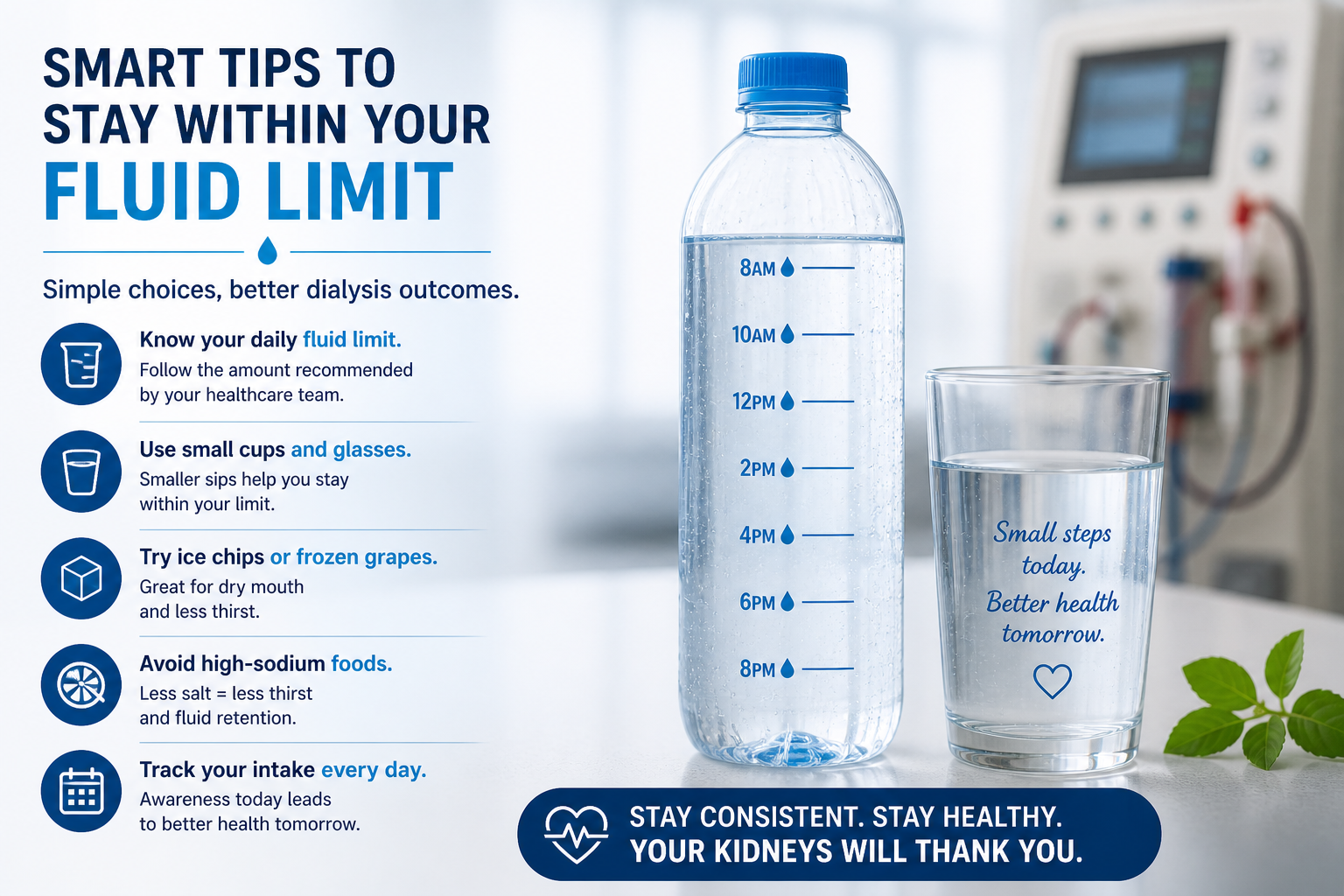
    The truth: your fluid limit is not a suggestion. It’s a boundary your body can no longer negotiate past.

    Lie #2: “I’m thirsty, so my body must need it.”

    Oh, this one broke my heart when I understood it properly. Thirst is controlled by your brain — and in kidney disease, especially on dialysis, your brain can send thirst signals that your body cannot actually process safely.

    Your body feels like it needs more. But what it actually needs is for the fluid you already have to be managed properly.

    Thirst in kidney disease is not always a green light. It’s often a signal to slow down and assess.

    What helps: ice chips instead of full sips, lemon slices to ease dry mouth, small frequent sips rather than full glasses.

    Lie #3: “This rule is for serious patients, not me.”

    I’ve heard this one so many times — and I’ve said it myself during periods when I felt “okay.” When your numbers aren’t too bad, when you’re not yet on dialysis, it’s easy to think fluid restriction doesn’t apply to you yet.

    But here’s what I’ve learned through 15 years of living this: the patients who start taking these limits seriously before things get bad are the ones who stay out of the emergency room longer.

    Fluid restriction is not punishment for being sick. It’s protection for staying as well as possible.

    Lie #4: “I can make up for it later.”

    There’s no such thing as “fluid fasting” to make up for yesterday’s overdrink. Your kidneys — or your dialysis machine — can only process so much.

    The excess stays in your body causing harm while you’re waiting to “catch up.”
    Every day is its own fluid budget. Spend it wisely.

    What I’ve Learned After 15 Years

    Fluid restriction is not about deprivation. It is about learning to live wisely within a new reality — and once you stop fighting it, something unexpected happens: you find peace in the discipline.

    You learn to sip slowly. To savour. To plan. And weirdly, you start to appreciate water in a way most people never will.

    That’s the gift hidden inside the restriction.

    This month on Kidney Health Awareness Ghana, we’re diving deep into the topic of Restrictions & Diet — Living Wisely, Not Fearfully. Each week we’ll cover a different area. This week, we’re talking fluids.

    If this post helped you or someone you love, please restack it or share it. And tell me — which of these lies have you told yourself? I’d love to hear in the comments. 💙

  • The Silent Thief : Hypertension.

    The Silent Thief : Hypertension.

    “Hypertension does not knock before it enters. It does not announce its arrival. It simply walks in — and begins to take.”

    I want to talk to you about something that affects one in three adults in Ghana — yet most people living with it have no idea. Not because they haven’t been told. But because it produces no pain, no visible symptoms, no alarm bells. It moves quietly. It works slowly. And by the time most people notice, it has already done considerable damage.

    We call it hypertension. But I prefer to call it what it is: A Silent Thief.

    This article is not a clinical textbook. It is a conversation I wish someone had sat me down and had with me years ago — before kidney disease became my reality. Because hypertension and kidney disease are deeply, intimately linked. And everything I know now, I want you to know before it becomes a lesson learned the hard way.

    “`

    Part One

    What is Hypertension — and Why “Silent Killer” Is Not an Exaggeration

    Blood pressure is the force your blood exerts against the walls of your arteries as your heart pumps it around your body. A normal reading sits around 120/80 mmHg. The top number (systolic) measures pressure when your heart beats. The bottom number (diastolic) measures pressure when your heart rests between beats.

    Hypertension is diagnosed when that reading consistently sits at 140/90 mmHg or above. At that level, your arteries are under constant, excessive strain. Over time, that strain damages the vessel walls. It forces the heart to work harder than it was designed to. And it quietly damages organs — your brain, your eyes, your heart, and critically for my community, your kidneys.

    “`

    “It is called the silent killer not for dramatic effect. It is called that because it kills quietly — and the person dying often feels perfectly fine.”

    The kidneys filter about 200 litres of blood every single day. They are highly vascular — full of tiny, delicate blood vessels. When blood pressure is persistently high, those vessels are damaged. The kidneys lose their ability to filter effectively. And once kidney function deteriorates, it in turn makes blood pressure harder to control. The two feed each other in a cycle that, left unchecked, ends in kidney failure.

    I know this not from a textbook. I know this from my own body.

    “`

    Part Two

    The Genetics of Hypertension — When It Runs in the Family

    One of the most important conversations we are not having enough in Ghana is about family health history. Hypertension has a strong genetic component. If one of your parents has it, your risk is significantly elevated. If both parents have it, your risk is even higher.

    Researchers have identified multiple genetic variants that influence how the body regulates blood pressure — how the kidneys handle sodium, how blood vessels respond to stress, and how hormonal systems that control fluid balance behave. These are inherited. You can receive them from either parent.

    “`

    Questions to ask your family this week

    • Did your parents or grandparents have high blood pressure?
    • Has anyone in your family had a stroke or heart attack at a young age?
    • Has anyone been told their kidneys were failing?
    • Is there a pattern of early death from heart or kidney disease?

    This is not to frighten you. Genetics is not destiny. But knowing your family history means you can be proactive rather than reactive. You can monitor your blood pressure regularly. You can make lifestyle adjustments early. You can give yourself the gift of time — which is the one thing a silent disease like hypertension tends to steal.

    If hypertension runs in your family, you should be checking your blood pressure at least every six months — even if you feel perfectly healthy. Especially if you feel perfectly healthy.

    “`

    Part Three

    The Lifestyle Factors Feeding It Quietly

    Even if you have no genetic predisposition, your daily habits can build hypertension brick by quiet brick. This is both sobering and empowering — sobering because it means our choices matter enormously, empowering because it means there is always something we can do.

    “`

    Lifestyle factors that raise blood pressure

    • Excess salt intake — Sodium causes the body to retain water, increasing the volume of blood and therefore the pressure on artery walls. Most of us eat far more salt than we realise — it hides in processed foods, seasonings, and canned goods.
    • Physical inactivity — A sedentary lifestyle weakens the heart and reduces the flexibility of blood vessels. Even 30 minutes of moderate walking five days a week makes a measurable difference.
    • Chronic stress — Stress triggers hormones that temporarily raise blood pressure. When stress is constant — as it is for many of us — the elevation becomes less temporary.
    • Alcohol consumption — Heavy drinking raises blood pressure and can interfere with blood pressure medications.
    • Smoking — Nicotine causes immediate spikes in blood pressure and damages blood vessel walls over time.
    • Obesity — Excess weight forces the heart to work harder. Fat tissue also produces hormones that affect blood pressure regulation.
    • Poor sleep — Inadequate or disrupted sleep affects the body’s ability to regulate stress hormones, which in turn affects blood pressure.

    Notice how ordinary all of these are. There is no dramatic villain here. Hypertension is built in the ordinary — in the extra salt, the skipped walks, the sleepless nights, the unprocessed stress. That is precisely what makes it so insidious.

    “`

    Part Four

    Foods to Avoid — and What to Eat Instead

    Food is medicine. And food can also be the opposite of medicine. When it comes to hypertension, what you put on your plate three times a day has a direct, measurable effect on your blood pressure. Let me be practical with you.

    “`

    Limit or Avoid

    • Table salt and excess seasoning cubes
    • Processed and canned foods
    • Smoked, salted, or cured fish and meats
    • Fried foods and fast food
    • Sugary drinks and sodas
    • Red meat in large quantities
    • Full-fat dairy products
    • Alcohol
    • Pickled vegetables

    Embrace These

    • Fresh fruits — especially bananas and oranges
    • Leafy green vegetables
    • Garlic — a natural vasodilator
    • Oats and whole grains
    • Beans and legumes
    • Fish rich in omega-3 (fresh, not salted)
    • Low-fat yoghurt
    • Nuts — especially almonds and walnuts
    • Water — consistently, daily

    A word specifically for my Ghanaian community: our traditional diet is not the enemy. Kenkey, banku, kontomire, garden eggs, garden egg stew, fresh fish — these are not the problem. The problem is often what we add to them. The extra salt. The excess seasoning. The processing. We have a rich food culture. We simply need to return to its less processed roots.

    “You do not have to abandon your culture to protect your health. You need to understand your culture’s food deeply enough to use it wisely.”

    “`

    Part Five

    You’ve Been Diagnosed. Now What?

    This is the part I feel most strongly about. Because I have watched too many people receive a hypertension diagnosis, start their medication, feel better, and then quietly stop taking it. Sometimes because the side effects were unpleasant. Sometimes because a family member recommended a herbal concoction. Sometimes simply because they felt fine and could not understand why they needed a tablet every day when nothing seemed wrong.

    Let me say this as clearly and as lovingly as I can:

    “`

    If you have been prescribed blood pressure medication

    • Take it every day — consistency is what makes it work. Blood pressure medication is not a course you complete. For most people, it is a lifelong companion.
    • Do not skip doses — even when you feel well. Especially when you feel well. Feeling well is often the medication working.
    • Do not substitute with herbal concoctions — I understand the cultural pull. I understand that some of these remedies have been passed down through generations. But they have not been tested against your specific blood pressure, your specific kidney function, your specific medication. The risk of interaction is real.
    • Tell your doctor about everything you are taking — including herbs, supplements, and traditional medicines. No judgment. Just safety.
    • If a side effect is unbearable — talk to your doctor about alternatives. There are many blood pressure medications. You should not have to suffer to be compliant.

    Your medication is not your enemy. It is your body’s daily support system. Think of it the way you think of food and water — not optional, but necessary for the machine to function properly.

    “`

  • 🩺🍎 THE KIDNEY-TYPE TABLE — Episode 1 Two Foods Every Kidney Patient (and Everyone Else) Needs to Know.

    🩺🍎 THE KIDNEY-TYPE TABLE — Episode 1 Two Foods Every Kidney Patient (and Everyone Else) Needs to Know.

    Whether you’re on dialysis, living with reduced kidney function, or simply want to protect the kidneys you have — what you eat either fights for you or works against you.

    Today we’re starting simple. Two foods. Deep dive. Real talk.

    🧄 FOOD #1 — GARLIC

    Your Kidney’s Quiet Protector
    Garlic is one of the most powerful anti-inflammatory foods on the planet. For kidney patients, inflammation is a silent enemy — it accelerates kidney damage, strains the heart, and wears the body down over time. Garlic fights that directly.

    What garlic gives you:

    ✅ Allicin — the active compound that reduces inflammation and fights infection. Dialysis patients are at higher risk of infection, so this matters enormously.

    ✅ Vitamin B6 — supports nerve function and reduces homocysteine levels, which are often elevated in dialysis patients and linked to heart disease.

    ✅ Natural blood pressure support — garlic helps relax blood vessels. Since most kidney patients also battle hypertension, this is a double win.

    For dialysis patients: Garlic is low in potassium and phosphorus — two minerals dialysis patients must strictly monitor. Use it instead of salt when you cook. Your labs will thank you.

    For healthy people: Regular garlic consumption helps reduce the risk of developing high blood pressure — one of the top two causes of kidney failure. You’re protecting kidneys you don’t even know are at risk yet.

    🫐 FOOD #2 — BLUEBERRIES

    Small Fruit. Serious Kidney Work.

    Don’t let the size fool you. Blueberries are doing serious work inside your body every time you eat them.

    What blueberries give you:

    ✅ Anthocyanins — the pigment that makes blueberries blue. These antioxidants protect kidney cells from damage caused by toxins, high blood sugar, and inflammation.

    ✅ Vitamin C — dialysis removes water-soluble vitamins including Vitamin C. Blueberries help replenish this naturally.

    ✅ Fiber — slows sugar absorption and protects kidney function over time. Diabetes is the number one cause of kidney failure. Fiber fights that.

    For dialysis patients: Blueberries are low in potassium — unlike bananas or oranges. Eat them fresh or frozen. Avoid blueberry juices or jams which are concentrated and harder to control.

    For healthy people: Consistent antioxidant intake from blueberries reduces your risk of chronic kidney disease by protecting your cells before damage begins. Think of it as insurance for your kidneys.

    ❌ WHAT TO LIMIT OR AVOID

    🧂 Salt (Sodium)

    Raises blood pressure, causes dangerous fluid retention between dialysis sessions, and silently damages kidney filtering ability over years — even in healthy people. Use garlic, herbs, and spices instead. Read every label — processed foods are loaded with hidden sodium.

    🥤 Dark Sodas (Coke, Pepsi etc.)

    Contain phosphoric acid that pulls calcium from your bones and calcifies blood vessels. Even for healthy people, regular soda consumption is directly linked to kidney stones and early kidney function decline. Switch to water or herbal teas.

    🍌 High Potassium Foods (dialysis patients specifically)

    Bananas, oranges, potatoes, tomatoes, avocados are healthy for most people — but for dialysis patients excess potassium can cause hyperkalemia, leading to dangerous heart rhythm problems. Know your lab numbers. Work with your dietitian.

    💙 FROM HILDA’S TABLE

    I started dialysis in 2012. I had a transplant in 2014 — and meningitis caused rejection. So here I am, back on dialysis. Still standing. Still advocating.

    Nobody sat me down early and said “here’s what to eat and why it matters.” I had to learn the hard way — through my labs, through my fatigue, through watching what I ate affect how I felt on the machine.

    That’s why I’m here. You deserve to know this before it becomes a crisis — whether you’re on dialysis or you still have healthy kidneys to protect.

    Start with garlic and blueberries this week. Small changes at your table. Big impact on your kidneys. 💙

    Follow The Kidney-Type Table every Saturday at thekidneyadvocate.blog

  • Is Kidney Disease in Your Code? Understanding the Link Between Genetics and Kidney Failure

    Is Kidney Disease in Your Code? Understanding the Link Between Genetics and Kidney Failure

    When we talk about kidney health, the conversation usually centers on lifestyle: “Watch your salt intake,” “Drink more water,” or “Manage your sugar.” While these are critical pieces of the puzzle, there is a silent factor that many people overlook until it is too late: Genetics.

    At Kidney Health Awareness Ghana, we believe that knowledge is the first line of defense. Understanding your genetic blueprint doesn’t mean you are destined for kidney failure; it means you have been given a roadmap to prevent it.

    The Genetic “Hidden Hand

    Genetics can influence kidney health in two ways: by directly causing a disease or by making you more susceptible to other conditions that damage the kidneys.

    1. Polycystic Kidney Disease (PKD)

    PKD is one of the most common inherited disorders worldwide. It causes clusters of fluid-filled cysts to develop in your kidneys. Over time, these cysts grow larger, replacing healthy tissue and eventually leading to kidney failure. Because it is hereditary, if one parent has the dominant form of PKD, each child has a 50% chance of inheriting it.

    2. The APOL1 Risk Factor

    Recent Breakthroughs in genomic research have identified variants in the APOL1 gene that are significantly more common in individuals of African descent. While these variants originally evolved to protect people against African sleeping sickness, they significantly increase the risk of developing Chronic Kidney Disease (CKD) and progressing to end-stage renal failure.

    3. Shared Predispositions

    Sometimes, it isn’t a “kidney gene” specifically, but the inheritance of Hypertension (High Blood Pressure) or Type 2 Diabetes. Since these are the leading causes of kidney failure globally, inheriting a tendency toward these conditions puts your kidneys on the front lines.

    Moving from Fear to Advocacy

    For a long time, there has been a stigma surrounding kidney issues. People often feel they “did something wrong.” But you cannot control your DNA. By focusing on genetics, we shift the narrative from blame to biology.

    As advocates, we use this information to push for early screening. If you know your family history, you shouldn’t wait for symptoms like swelling or fatigue—which often only appear when kidneys are already failing. You should be proactive.

    Your Proactive Action Plan

    If you have a family history of kidney disease, here is how you take control:

    The Family Conversation: Host a “health history” chat with your parents, siblings, and extended family. Ask specifically about “weak blood,” dialysis history, or early deaths related to “water in the body.”

    The “Lab Detective” Approach: Request specific tests from your doctor. A simple uACR (Urine Albumin-to-Creatinine Ratio) and a eGFR (Blood Test) can tell you how your kidneys are performing long before you feel sick.

    Genetic Counseling: In some cases, professional genetic testing can provide clarity, especially for those planning to start a family or those considering being a living kidney donor for a relative.

    Final Thoughts

    Your DNA is the blueprint, but you are the builder. A genetic predisposition is a warning, not a sentence. By identifying these risks early, managing our blood pressure, and staying informed, we can rewrite the story of kidney health in our families.

    My name is Hilda Addo, and I’m your kidney disease advocate.

    Want to dive deeper into your lab results? Join us every Wednesday for our Lab Detective series where we break down the jargon and put the power back in your hands.

  • The 10-Minute Rule: Why “5-Hour” Stamina is Killing Your Kidneys

    The 10-Minute Rule: Why “5-Hour” Stamina is Killing Your Kidneys

    Today on Lab Detective Wednesday , I want to talk about a “silent” cause of renal failure that is currently filling our clinics: the obsession with unregulated aphrodisiacs and “street boosters.”

    The Dangerous Myth

    Many are chasing a “5-hour marathon” fantasy, fueled by powders, mixtures, and pills from unverified sources. They promise “unlimited power,” but they often deliver Acute Kidney Injury.

    The Lab Detective Reality Check: Most of these “boosters” are loaded with heavy metals like Lead and Mercury, or hidden chemicals like industrial solvents. Your kidneys—the world’s most sophisticated filters—were never meant to process these toxins. When you force a “5-hour” performance, you aren’t just exhausted; you are pushing your renal system toward total collapse.

    The Biological Truth

    Clinical research is clear: The natural, healthy average for intimacy is between 2 and 7 minutes. Trying to bypass your biology with toxic chemicals is an assault on your organs. This month, let’s normalize the truth: 2 minutes is natural. 5 hours is toxic. —

    The Healthy Alternative: Kidney-Friendly Vitality

    you want to boost your energy and intimacy without risking dialysis, focus on these natural, kidney-safe options:

    1. Watermelon (The Natural “V”): High in L-citrulline, an amino acid that improves blood flow throughout the body. It’s hydrating and easy on the kidneys.

    2. Beets (The Blood Flow Booster): Rich in nitrates, which help dilate blood vessels. This improves circulation naturally and can even help manage blood pressure—your kidneys’ best friend.

    3. Dark Chocolate (70%+ Cocoa): In moderation, the flavonoids in dark chocolate improve circulation and reduce stress without the toxic additives found in street pills.

    4. Physical Exercise: Nothing improves performance better than a healthy heart and strong circulation. 30 minutes of walking is the best “aphrodisiac” there is.

    5. Stress Management: High cortisol (stress) is the #1 killer of intimacy. Sleep and peace of mind are more powerful than any powder.

    The Verdict

    True vitality doesn’t come from a mysterious bottle on a street corner. It comes from a body that is well-filtered and well-cared for. Choose your kidneys over the myth.

    My name is Hilda Addo, and I’m your kidney disease advocate.

  • The Silent Threat: Why Early Detection is Your Best Defense Against Kidney Disease

    The Silent Threat: Why Early Detection is Your Best Defense Against Kidney Disease

    Most people believe that if they are sick, they will feel it. We wait for the pain, the fatigue, or the fever to tell us something is wrong. But when it comes to your kidneys, silence is not golden—it is dangerous.

    Chronic Kidney Disease (CKD) is often called a “silent killer” because it frequently shows no symptoms until the kidneys are nearly failing. By the time someone notices physical changes, the damage is often advanced

    The Leading Culprits: Diabetes and Hypertension

    While many factors contribute to kidney health, two conditions are responsible for the vast majority of kidney failure cases:

    1. Diabetes: High blood sugar acts like sandpaper on the delicate filters of the kidney, scarring them over time.

    2. High Blood Pressure: Hypertension puts excessive pressure on the small blood vessels in the kidneys, causing them to weaken or harden.

    If you are living with either of these conditions, your kidneys are on the front lines every single day.

    Disparities in Health: A Focused Reality

    It is a sobering reality that kidney disease does not affect all communities equally. Statistics show that African Americans are disproportionately affected, being nearly four times more likely to develop kidney failure than Caucasians.

    This disparity is driven by a complex mix of genetic predispositions, such as the APOL1 gene, and systemic issues including limited access to early screening and preventative care. Acknowledging this is the first step toward changing the narrative through advocacy and education.

    The Power of the “Big Three” Tests

    Since you cannot rely on how you “feel,” you must rely on data. If you have a family history of kidney disease, struggle with obesity, or have cardiovascular issues, you should advocate for these three specific tests:

    • Creatinine: A blood test that measures a waste product your kidneys should be filtering out.

    • eGFR (Estimated Glomerular Filtration Rate): This number tells you how well your kidneys are filtering based on your creatinine levels, age, and sex.

    • Urine Albumin: A simple urine test to see if protein is “leaking” through your kidney filters—often the earliest sign of trouble.

    Take Action Early

    Early detection doesn’t just mean finding a problem; it means finding an opportunity to slow the progression of the disease through lifestyle changes, medication, and specialized care.

    Don’t wait for symptoms to speak up. Start the conversation with your healthcare provider today.

    My name is Hilda Addo, and I’m your kidney disease advocate.